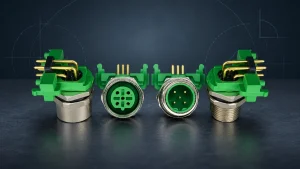
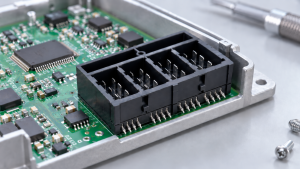
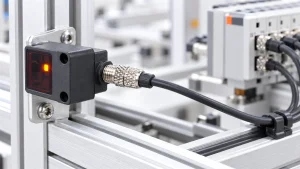
An electrical connector is a device that connects parts of a circuit or different circuits, forming a bigger circuit. The connection can be temporary, needing tools to set up or remove, or can be a permanent joint. Adapters help join connectors that aren’t the same. Most connectors have a “gender,” with male plugs connecting to female sockets. Thousands of designs exist for power, data, and audiovisual uses.
In this article, we will break down the different types of electronic connectors and examines future development trends.
Types of Electronic Connectors
Electronic connectors can be classified from multiple perspectives:
By Application / Function
Data Connectors
USB (Universal Serial Bus)
For general-purpose data transfer and power. Includes USB-A, USB-B, Mini B, Micro B, and Type-C.

USB Connector Specifications
| Connector Type | Max Data Speed (Theoretical) | Power Delivery (Typical) | Reversible | Application |
| Type-A (3.0) | 5 Gbps (USB 3.0 / 3.1 Gen 1) | Up to 4.5W (5V, 900mA) | No | Universal connector for host devices and peripherals like computers, hubs, chargers, flash drives, etc. |
| Type-B (3.0) | 5 Gbps (USB 3.0 / 3.1 Gen 1) | Up to 4.5W (5V, 900mA) | No | Primarily used for larger peripheral devices like printers, scanners, and external hard drive enclosures. |
| Mini-B | 480 Mbps (USB 2.0) | Up to 2.5W (5V, 500mA) | No | Older digital cameras, MP3 players, some early smartphones, and other portable devices. |
| Micro-B | 480 Mbps (USB 2.0) | Up to 2.5W (5V, 500mA) | No | Most older and entry-level Android smartphones, tablets, Bluetooth headphones, power banks, etc. |
| Type-C | 480 Mbps to 80 Gbps | Up to 240W (with USB PD 3.1) | Yes | The standard for modern devices including smartphones, laptops, tablets, monitors, external SSDs, and chargers. |
The technical specifications listed above are based on the official standards published by the USB Implementers Forum (USB-IF).
RJ45
RJ45 (Registered Jack 45) is the standard connector used for wired Ethernet networks (LANs).It uses an 8-pin design to connect devices like computers and routers to the network and internet,supporting speeds up to 10 Gbps with Cat6a cables.

HDMI (High-Definition Multimedia Interface)
Transmits high-definition video and audio. Comes in full-size, mini, and micro versions.

DisplayPort
Similar to HDMI, with support for higher refresh rates and resolutions.

D-Sub (D-subminiature)
Used for VGA (video graphics), serial (DB9), and parallel connections.

SATA / SAS
Used to connect internal storage devices (hard drives, SSDs).
SATA is faster and thinner than legacy IDE cables.

PCIe (Peripheral Component Interconnect Express)
Connects high-speed components like graphics cards and SSDs to motherboards.

FFC / FPC Connector (Flexible Flat Cable / Flexible Printed Circuit)
Used in compact devices (e.g., cameras, phones) for high-density connections.

Modular Jacks (RJ11, RJ45, RJ12)

| Type | Configuration | Application |
| RJ11 | 6P4C or 6P2C | Used for single-line telephone systems and modems. |
| RJ45 | 8P8C | The standard for Ethernet networking, connecting computers, routers, and switches. |
| RJ12 | 6P6C | Similar in size to RJ11 but uses all 6 contacts for some multi-line phone systems. |
Other types: RJ10/RJ22 (4P4C for telephone handsets), RJ14 (6P4C for two-line phones), RJ25 (6P6C for up to three devices), and RJ21 (a large 50-contact connector for multi-line enterprise phone systems).
Power Connectors

- AC Power Connectors
Includes IEC C13/C14, C5/C6 for computers and appliances. - DC Barrel Jacks
Found in laptops, routers, and small electronics. Usually center-positive with varying diameters. - Terminal Blocks / Strips
Industrial connectors used for wiring equipment securely. - Anderson Powerpole & XT60/XT90
Popular in high-current DC applications like RC models or solar systems. - Automotive Power Connectors
Designed for durability under heat, moisture, vibration.
Audio / Video Connectors

- 3.5mm Jack (TRS/TRRS)
For stereo audio, microphones, or headset control signals. - RCA
Analog audio (red/white) and composite video (yellow). - XLR
Balanced audio connection for microphones and sound systems. - DIN / Mini-DIN
Used for older audio and MIDI equipment.
RF (Radio Frequency) Connectors

- SMA, SMB, SMC
Used in antennas, GPS, and RF boards; compact and precise. - N-Type, TNC
Larger, threaded, and built for weather resistance in outdoor or industrial setups.
Board-to-Board Connectors

- Directly connect two PCBs. Options include mezzanine, coplanar, and right-angle styles.
Wire-to-Board Connectors

- Cable-to-PCB connections for modular designs. Often crimped or IDC-type.
Wire-to-Wire Connectors

- Enable joining wires together. Includes JST, Molex, or waterproof automotive styles.
Automotive Connectors

- Sealed and heat-resistant multi-pin assemblies used across vehicle systems.
Circular Connectors

- Cylindrical and rugged, ideal for harsh environments like aerospace or industrial machinery.
By Termination Method
| Termination Type | Description |
|---|---|
| Crimped | Mechanical compression holds wire in place — fast, tool-assisted |
| Soldered | Wire fused to metal contact via solder — strong, but permanent |
| IDC | Insulation-Displacement Connectors pierce the wire jacket for quick install |
| Pogo Pin | Spring-loaded pins allow repeated docking/undocking (e.g., charging bases) |
By Shape / Geometry
| Shape | Features | Common Examples |
|---|---|---|
| Rectangular | Pin rows, compact design | USB, D-Sub, SATA, RJ45 |
| Circular | Threaded/snap-fit locking, rugged | M8, M12, XLR, Aviation |
| Blade | Quick-connect flat contact tabs | Car fuses, relays |
By Gender
- Male (Plug)
Protruding pins or blades. Used for insertion. - Female (Socket / Jack)
Holes or slots to receive male pins.
Comparison of Common Connectors
| Interface Type | Primary Application | Max Data Rate (Approx.) | Power Delivery | Key Features |
|---|---|---|---|---|
| USB Type-C | Consumer electronics, PC, mobile devices | Up to 80 Gbps (USB4 v2.0) | Up to 240W (USB PD 3.1) | Reversible, integrated data/video/power |
| Ethernet (RJ45) | Wired networks, routers, switches | 1 Gbps ~ 10 Gbps (common) | Up to ~90W (PoE++) | Stable network connection, Power over Ethernet |
| HDMI | TVs, gaming consoles, home theater | 48 Gbps (HDMI 2.1) | Low, signal-only | Audio Return Channel (ARC/eARC) |
| DisplayPort | PC, professional monitors | 80 Gbps (DP 2.1) | Low, signal-only | Daisy-chaining (MST), high refresh rate support |
| SATA | Internal storage (HDD, SSD) | 6 Gbps (SATA 3.0) | Usually separate power cable | Designed specifically for storage devices |
| PCIe | Internal expansion (graphics cards, high-speed SSDs) | ~64 GB/s (PCIe 5.0 x16) | Direct motherboard slot power (75W+) | High bandwidth, low latency, direct CPU connection |
Four Major Development Trends Of Electronic Wire Connectors
The electronic connector industry is rapidly evolving to meet next-generation technology demands. Looking ahead, four trends stand out prominently:
Miniaturization & High-Density
To accommodate increasingly compact electronic devices, connectors are becoming smaller. Currently, fine-pitch connectors with pin spacing less than 0.5mm have become mainstream. However, size reduction brings significant manufacturing challenges, particularly in maintaining mechanical strength and controlling signal crosstalk.
High-Speed & Signal Integrity
AI and data center development are driving dramatic leaps in data rates. The connector industry is advancing toward 112Gbps and even 224Gbps ultra-high data rates. A key enabling technology is PAM4 pulse amplitude modulation, which can transmit double the data at the same baud rate, but places extremely demanding requirements on connector signal integrity design.
Power & Data Convergence
The trend toward “one cable solves everything” is accelerating. Led by USB-C, the latest USB PD 3.1 standard supports up to 240W power delivery, making it possible to power monitors, small appliances, and other devices through a single cable. This convergence approach is being widely adopted in industrial automation and automotive sectors.
Intelligence & High Reliability
Connectors are evolving from passive components to intelligent parts. Smart connectors integrating memory or sensors are emerging for condition monitoring and diagnostics. Simultaneously, ruggedization design for harsh environments is crucial, using IP67/IP68 sealing technology and new materials to ensure long-term reliable operation under extreme temperatures, humidity, and vibration.
Making the Right Connection
Understanding connector types is just the first step—if you’re looking for customized connectivity solutions or in the process of product selection, our range of electronic connectors may be exactly what your project needs.
Explore our full range of electronic wire connectors designed for performance, reliability, and seamless integration across industries.
Interested in who’s shaping the connector market? Don’t miss our 2025 guide to the top power connector manufacturers.